Looking for inheritance tax planning in St Austell you can genuinely trust? We match you with an established, independently vetted, FCA-regulated adviser specialising in inheritance tax planning, serving St Austell, free, and with no obligation.
Why St Austell households seek inheritance tax planning
As property values have risen, more estates in St Austell are drawn towards the inheritance-tax threshold than their owners expect, often the family home alone is enough.
Careful, entirely legitimate planning can make a substantial difference to what passes to your family rather than to HMRC, and starting early matters enormously.
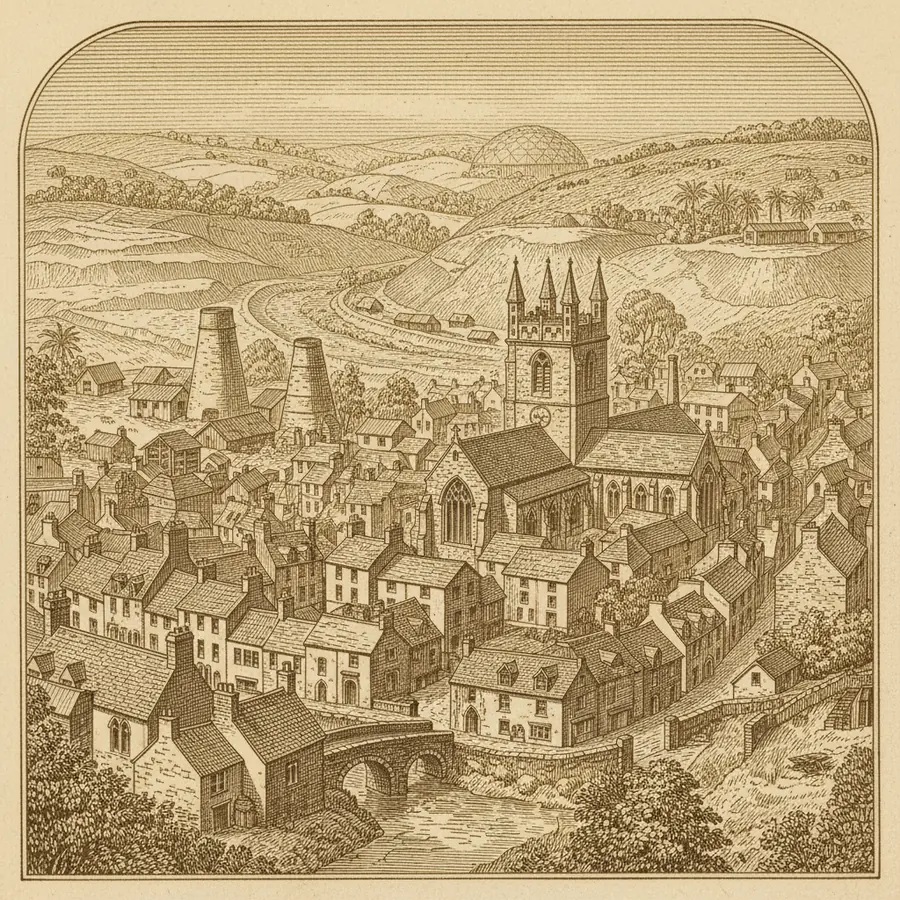
St Austell is a large town in Cornwall, home to around 20,000 people, Cornwall’s largest town, former china-clay capital, gateway to the Eden Project.
The character of the area shape the advice most needed here, pensions, retirement, IHT, business owners, the kind of high-value planning a properly qualified, genuinely local adviser handles best.
A Cornwall community
Cornwall’s largest town; former china-clay capital; gateway to the Eden Project.
Pensions
Consolidation, drawdown and pension transfer decisions.
Retirement income
A strong local need for sustainable retirement income planning.
Inheritance tax
Property-rich households planning to protect their estate and pass on more.
What shapes inheritance tax planning in St Austell
Cornwall’s largest town by population. A former china-clay capital now built around retail, tourism and light industry.
On the main line, with Truro west and Bodmin north east. Among the more affordable in Cornwall, with clay-country villages inland and coastal premiums at Charlestown and Carlyon Bay.
The largest local employers include Eden Project and Imerys (china clay operations), which shapes the kind of pension arrangements advisers here deal with most often.
The questions that come up most in St Austell
- 1
Deferred benefits from the china-clay industry, where scheme paperwork is often decades old
- 2
Households where earnings sit below the Cornwall average, making pension adequacy the central question
- 3
Tourism and hospitality businesses with seasonal income
Pension arrangements advisers meet in St Austell
- Legacy industrial defined-benefit schemes from the clay industry
- Auto-enrolment pots from retail and tourism
A inheritance tax planning specialist who actually works in St Austell will already know this picture. That local familiarity is part of what we check before we introduce anyone in Cornwall.
What inheritance tax planning in St Austell covers
The advisers we match you with help across the full range of inheritance tax planning. These are the areas St Austell clients ask about most.
Understanding your IHT position
A clear picture of whether, and by how much, your estate is exposed.
Allowances & the residence nil-rate band
Making full use of the allowances available to you and your family.
Gifting strategies
Using exemptions and the seven-year rule to reduce your estate sensibly.
Trusts
Where appropriate, using trusts to control and protect how wealth passes on.
Business & agricultural relief
Valuable reliefs for business owners and landowners, used correctly.
Pensions & your estate
How pensions sit outside your estate, and what that means for planning.
How we choose the best inheritance tax planning advisers serving St Austell

We don’t run a directory, and we don’t rank on who pays most. Every inheritance tax planning adviser we introduce in St Austell passes The Vetted Wealth Standard, the same four checks, applied every time, and deliberately more demanding than the regulatory minimum.
We start from the FCA register and the specific permissions your advice needs, then look hard at how established the firm really is, its qualifications, and its track record with real clients. Only firms we would recommend to our own family make the list.
- 1
FCA register verified
Authorisation and the specific permissions your advice needs, vital for regulated work such as pension transfers and equity release.
- 2
Genuinely established
A real, sustained track record in and around St Austell, a stable team with local roots, not a call-centre with a local postcode.
- 3
Properly qualified
Chartered (CII) or Certified (CISI) status, plus any specialist qualifications your situation calls for.
- 4
Track record examined
Complaints history and client outcomes reviewed, and monitored over time.
Anyone can call themselves a financial adviser. We make sure the one you speak to is genuinely established, properly qualified, and demonstrably trusted, before we ever introduce you.
The Vetted Wealth StandardNot a directory. A concierge service.

Why use us, when you could search online or fill in a comparison form? Because those tools do something very different. A directory lists whoever pays or registers; a comparison site ranks on headline fees, not on whether a firm is genuinely any good.
We work the other way around, vetting first, then introducing you by hand to a single firm that suits your situation. No ranked table, no “sponsored” badge, no pressure. And because it’s free to you, there’s nothing to lose.
A directory or comparison site
- Lists whoever pays or registers
- Ranks on headline fees, not quality
- No due diligence on your behalf
- Hands you a list and wishes you luck
Vetted Wealth
- We vet every firm first
- Matched by hand to your situation
- Full due diligence, done for you
- One right adviser, free, no obligation
How advice needs change through life in St Austell
The right conversation looks very different at 40 than at 70. Good advice grows with you through every stage.
Building up
30s–40s. Protection, workplace pensions, a mortgage and starting to invest through ISAs.
Approaching retirement
50s–60s. Consolidating pensions, the allowances, drawdown versus annuity, and usually keeping DB benefits.
In retirement
A sustainable income that lasts, tax-efficient withdrawals, and planning for later-life care.
Passing on wealth
Estate planning, allowances, gifting, trusts, and structuring pensions to pass on more.
Inheritance tax planning in St Austell, explained
A plain-English look at what inheritance tax planning means for St Austell households, open any section for the detail.
Why IHT planning differs in St Austell
St Austell wealth is quietly substantial but rarely liquid. China-clay heritage, family businesses and property that has climbed steeply mean many estates now brush the threshold without the owners realising.
- Property-rich, cash-light, Much of the value sits in the family home and a scattering of let cottages, not in easily gifted savings or shares.
- Business at the core, Tradespeople, holiday-let owners and clay-country firms hold estates dominated by an asset they cannot simply give away.
- Values crept upward, Homes around Charlestown, Fowey and Pentewan rose sharply while the nil-rate band stayed frozen, pulling ordinary families into scope.
- Land and legacy, Smallholdings, paddocks and former clay ground on the fringes carry relief questions that town-centre estates never face.
Who most often needs it here
It is rarely the very wealthy who get caught. In St Austell it is settled families and business owners whose home and holdings have quietly outgrown the allowances.
- Retired homeowners, Couples in a long-held Cornish home now worth more than both nil-rate bands combined, with modest pensions alongside.
- Business owners, Builders, hospitality operators and clay-country tradesfolk whose firm may or may not qualify for full business relief.
- Holiday-let landlords, Owners of cottages toward Mevagissey or Fowey, unsure whether letting counts as a business for relief purposes.
- Second-marriage families, Blended households wanting children from an earlier marriage protected without disinheriting a surviving spouse.
- Land-holding families, Those with paddocks or old clay ground testing whether agricultural relief still applies after years of changed use.
What IHT planning actually involves
It is not one clever move but a sequence of decisions, taken in the right order. Good planning starts by measuring the position, then shapes it patiently over years.
- Map the estate, Add up home, cottages, business, pensions and savings to see whether, and by how much, the threshold is crossed.
- Claim the allowances, Line up both nil-rate bands and the residence band, checking the home actually passes to direct descendants.
- Plan the gifts, Decide what can be given now, using annual exemptions and seven-year rules, without leaving yourself short.
- Consider trusts, Weigh whether a trust protects children or a vulnerable relative, accepting the cost and complexity involved.
- Review relief, Test business and agricultural assets against the qualifying rules before assuming they escape tax entirely.
How local property and wealth change it
St Austell estates are shaped by bricks, land and a business far more than by portfolios. That makes the home and the firm the central planning problem.
- The frozen band bites, A home bought decades ago for a modest sum now dwarfs the £325,000 threshold that has not moved with it.
- Downsizing wrinkle, Selling the family home for a flat can affect the residence band, though rules exist to preserve it if handled early.
- Relief is conditional, Furnished holiday lets and part-time businesses do not automatically qualify for relief, and assumptions here prove costly.
- Pensions shifting, How pensions sit within an estate is changing, so old assumptions about them passing tax-free deserve a fresh look.
Where people come unstuck without advice
Most St Austell IHT mistakes are quiet ones, made in good faith years before they matter. By the time the family sees the bill, the chance to fix them has passed.
- Gifting the home, Signing the house to children while still living in it usually fails, counting as a gift with reservation.
- Assuming relief applies, Treating a holiday cottage as a business asset that escapes tax, then finding it never met the test.
- Leaving it late, Starting gifts in your eighties, when the seven-year clock may never fully run its course.
- DIY trusts, Copying a trust from a template without regulated advice, creating charges and confusion the family later untangles.
- Ignoring the band trap, Overlooking that the residence band tapers away once an estate climbs past two million pounds.
Why local, vetted, regulated advice matters
IHT planning mixes tax, pensions and family feeling. In a town where the estate is a home and a business, the adviser needs to understand both the rules and the place.
- Independently vetted, Every adviser we introduce is FCA-regulated and checked by us, so you meet someone already worth trusting.
- Knows the ground, An adviser who understands Cornish property, holiday lets and family firms spots the reliefs a distant office misses.
- Regulated where required, Defined-benefit transfers and equity release demand regulated advice, and we only ever match you with someone qualified to give it.
- Values fall too, Investments can fall as well as rise, so any plan is built to survive that, not to chase a single tax saving.
- Discreet and unhurried, A private, calm conversation about your family and estate, with no pressure and no obligation to proceed.
How good inheritance tax planning helps in practice
Illustrative examples of the situations a vetted inheritance tax planning adviser helps St Austell clients with, for illustration only, not advice.
The clay-country couple’s frozen home
A retired St Austell couple owned a home bought cheaply in the 1980s, now well over both nil-rate bands. Advice confirmed the residence band applied, structured modest yearly gifts to grandchildren, and used spousal transfers, trimming a looming bill without touching their day-to-day security.
The holiday-let owner’s relief surprise
An owner of two cottages near Mevagissey assumed the lets would escape IHT as a business. A vetted adviser showed they likely would not qualify, then reshaped ownership and life cover so the family could meet the tax without a forced, hurried sale.
The blended family’s careful trust
A remarried business owner near Charlestown wanted his children from a first marriage protected, without leaving his wife exposed. Regulated advice put part of the estate into a trust, balancing her security with their inheritance, and reviewed how business relief applied to the firm.
What inheritance tax planning costs in St Austell, and why our matching is free
Our matching service is free to you, always. The adviser we introduce explains their own fees clearly and in writing before you commit: there is no single national price, but the shape is consistent.
| How you pay | What it covers | Typical cost |
|---|---|---|
| Initial consultation | A first meeting to check the fit, with no obligation | Usually free |
| Percentage of assets | Ongoing advice on, and management of, the money invested for you | ~0.5%–1% a year |
| Fixed or hourly fee | A set price for a defined, one-off piece of advice | Agreed upfront |
| Our matching service | Vetting & introducing a suitable inheritance tax planning adviser serving St Austell | Free, always |
Questions worth asking any St Austell adviser
A good adviser will welcome these, and the answers tell you a great deal before you commit.
Are you independent or restricted?
Independent advisers consider products from across the whole market; restricted advisers work from a limited range. Both can be excellent, but you should know which you are speaking to.
What are your qualifications and permissions?
Look for Chartered (CII) or Certified (CISI) status, plus any specialist permissions your situation needs, such as pension-transfer or equity-release qualifications.
How exactly are you paid?
A good adviser explains their fees clearly and in writing before you commit, whether a percentage of assets, a fixed fee or an hourly rate.
Will I have a named adviser?
Continuity matters. You want to know who you will actually deal with, and that the relationship is ongoing rather than one-off.
How should I prepare for the first meeting?
A little preparation helps you get the most from it. Bring a rough picture of your finances, pensions, savings, investments, property and any debts, where approximate figures are perfectly fine to start. Just as useful are your goals, your timeline and your genuine feelings about risk, which matter every bit as much as the numbers. Recent pension or investment statements help if you have them, but don’t worry if you can’t find everything: a good adviser will help you gather it. Above all, write down anything you’re unsure about: no question is too basic, and the meeting is exactly what it’s for.
How quickly will an adviser get in touch?
Once you have been matched, a vetted adviser serving St Austell usually contacts you within a couple of working days to arrange a convenient time to talk, by phone, video or in person, whichever suits you.
Am I under any obligation?
None at all. Both the introduction and the first conversation are free and entirely without obligation. You decide whether to take things further, in your own time, with no pressure either way.
Related advice in St Austell
Most financial decisions connect. Whatever you need, we can match you with a vetted St Austell specialist.
How advice is regulated, and how you’re protected
Every firm we match you with is authorised and regulated by the Financial Conduct Authority. That framework is a large part of why speaking to a genuinely regulated adviser, not an unregulated introducer, matters so much.
Authorised firms must be competent, treat you fairly and give suitable advice. Check any adviser on the FCA’s public register.
A free, independent service to resolve any complaint you can’t settle with the firm directly.
If a regulated firm fails, the Financial Services Compensation Scheme may protect eligible claims.
What to expect, a simple, no-cost process

Being matched takes minutes and costs nothing. Tell us what you need; we introduce a suitable vetted inheritance tax planning adviser serving St Austell, who contacts you directly, usually within a couple of working days. The first conversation is typically free and without obligation.
Our matching service is free to you, forever. Any fees an adviser charges for their own advice are explained clearly and agreed with you before you commit.
| Stage | What happens | Cost to you |
|---|---|---|
| Matching | We vet & introduce a suitable St Austell adviser | Free, always |
| Initial consultation | Your situation reviewed, options explained | Usually free |
| Advice & recommendation | A written plan tailored to you, if you proceed | Agreed & disclosed upfront |
| Ongoing advice | Implementation and regular reviews | Often ~0.5%–1% p.a. or a fixed fee |
The value of investments can fall as well as rise, and you may get back less than you invest. This page is information, not personal financial advice.
Is it really free? Yes.
You are never charged and never under any obligation. We’re paid by the adviser firms in our network, only when we introduce a well-matched enquiry, and that never changes the regulated advice you receive. Your details are only ever shared with the single vetted firm we match you to.
Choosing the right inheritance tax planning adviser is one of the most consequential decisions you’ll make with your money. We’ve done the checking so you can start that relationship with confidence. When you’re ready, use the form on this page, we’ll introduce you to a vetted, trusted adviser serving St Austell, free and with no obligation.